Treebula Forest Monitoring
2025 · Product · Mobile · AI/Satellite
Designing a mobile-first service that helps forest owners monitor their property remotely using AI and satellite data.
Distance creates worry
Many forest owners live far from their property. They worry about storm damage, bark beetle attacks, and other risks but have no easy way to monitor what's happening.
Traditional solutions require physical visits or expensive consultants. By the time damage is discovered, it's often too late.
The challenge: How might we help forest owners feel secure and informed about their property, even from a distance, without overwhelming them with technical complexity?
Designing for forest owners
Private forest owners
Age group: 55–80 years
Building on internal expertise
Unlike traditional UX projects with formal user interviews, we built this service on internal expertise and long industry experience. Many of our stakeholders and team members are forest owners themselves.
Through structured workshops, ongoing discussions, and joint decisions, I gained deep knowledge of the target group's needs, daily life, and challenges. This made it possible to quickly test ideas, iterate, and ensure every function created real value.
Key Insights
- •Distance creates worry – Forest owners feel powerless when they don't know what's happening on their property
- •Time-critical information – Damage is often discovered too late. Real-time updates are essential
- •Need for simplicity – The target group is older and not technically savvy. The interface must be clear and safe
- •Local and relevant data – Users want specific information about their own property, not general forestry data
Balancing modern innovation with accessibility
Simple & Clear
Minimal technical competence required
Accessible
WCAG guidelines and clear contrasts
Modern
Clean aesthetics signaling innovation
Mobile-First
Optimized for on-the-go access
Focused
Minimal choices to reduce cognitive load
Contextual
Property-specific, relevant data
What we built
Property Overview
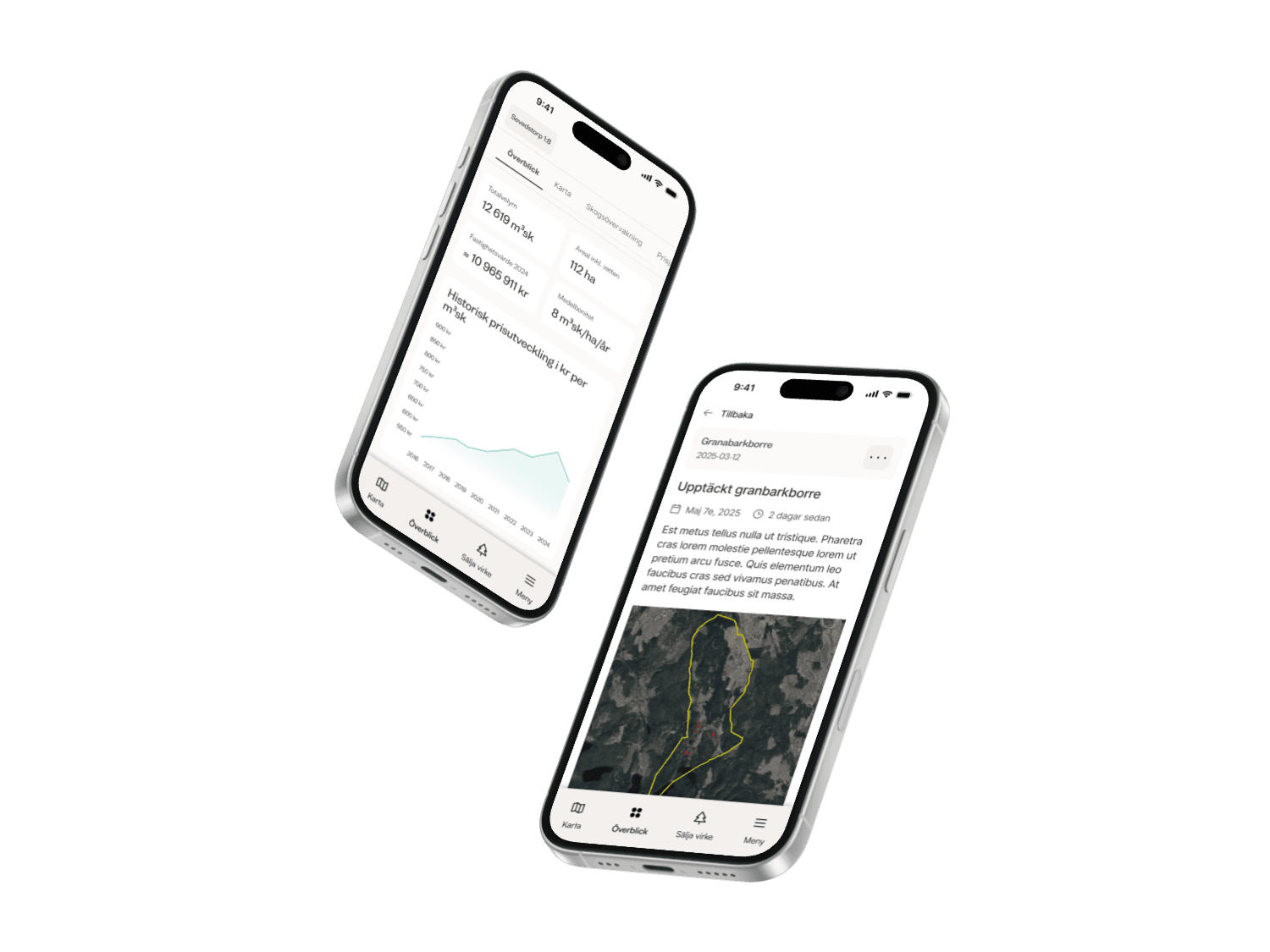
Dashboard showing forest status, recent events, and risk indicators at a glance
Risk Alerts
Real-time notifications about storm damage, bark beetle risks, and other threats
Wind Analysis
Interactive wind rose showing wind patterns specific to the property
Weather Forecast
Local weather data tied directly to the forest location
From idea to product
My role was to transform ideas and insights from the team into a working, visual, and user-friendly product. It was far from linear, more like a roller coaster of rapid iterations and new insights.
Since we were building something that didn't exist on the market before, flexibility and close collaboration were essential throughout the process.
Wireframes
Quick wireframes to visualize the product's basic structure and flow
Prototypes
Interactive prototypes in Figma to test interactions and flows
Iterations
Continuous testing and adjustments with stakeholders
What I learned
"This project proved how close collaboration between design, development, and business can create products that strengthen the brand and meet real needs in a traditionally analog industry."
Research isn't always traditional
User research doesn't always follow a textbook pattern. In this case, the strongest insights came from internal expertise deeply rooted in the target group's reality.
Balance function and aesthetics
Designing for an older, less tech-savvy audience without compromising modern feel deepened my understanding of how design can unite usability and innovation.
Collaboration drives success
When design, technology, and business goals work together, you can create products that not only work but actually make a difference.
Thanks for reading!
Up next: See how I approached Restaurang Apotek.