Loggi - Case study

Wellness should be a breath of air,
not a chore

A wellness app designed for calm, consistent check-ins, built around emotional safety and gentle habit formation.

Timeline2-Week Sprint
RoleUX/UI Designer
TypeConcept Project
Loggi hero image
THE CHALLENGE

Wellness without the noise. Most wellness apps feel like another task on an already crowded to-do list. They are loud, demanding, and often guilt-inducing. For this 2-week concept sprint, I set out to build Loggi a daily companion designed to feel like a deep breath rather than a digital chore.

THE INSIGHT

Design fueled by frustration

This project started with a personal observation: I often found myself abandoned by wellness tools the moment life got messy. They were too "peppig" or clinical. I realized that for a habit to stick, the tool needs to meet the user where they are especially on their "off" days.

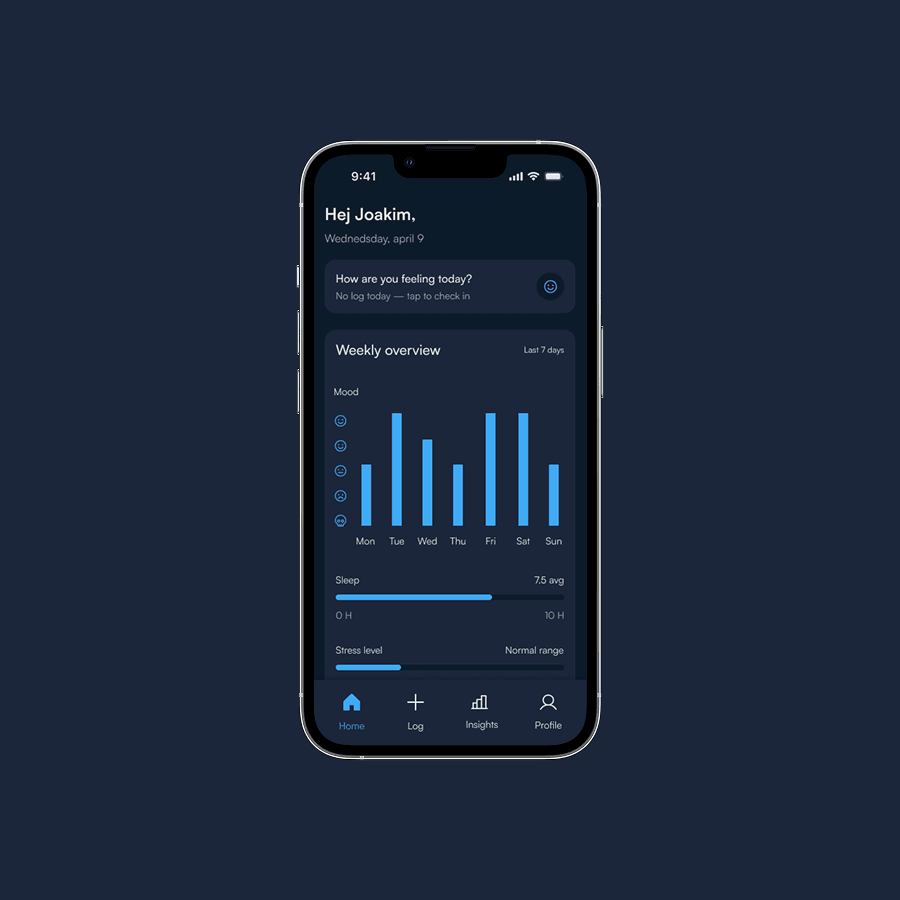
Loggi home background
THE STRATEGY

Designing for the "Low-Energy" User

From assumptions to design principles.. I began by challenging the status quo of wellness UI. If the goal is calm and consistency, the design must prioritize speed and emotional safety.

The 60-second rule

I hypothesized that a check-in flow under one minute would drastically lower the barrier to daily entry.

Support, not pressure

I assumed that by replacing "productivity language" with empathetic microcopy, we could create a space where users feel safe to log even their most difficult days.

A Dark Sanctuary

I chose a focused, dark UI to support evening reflection, reducing cognitive load when the user is most tired.

THE VISUAL LANGUAGE

Defining the emotional tone

Before pushing pixels, I defined four pillars for Loggi's voice: Supportive, Gentle, Authentic, and Empathetic. This meant avoiding loud colors and rigid borders, opting instead for organic shapes and a visual rhythm that feels slow and intentional.

Supportive

Gentle

Authentic

Empathetic

ONBOARDING

Welcoming users without pressure

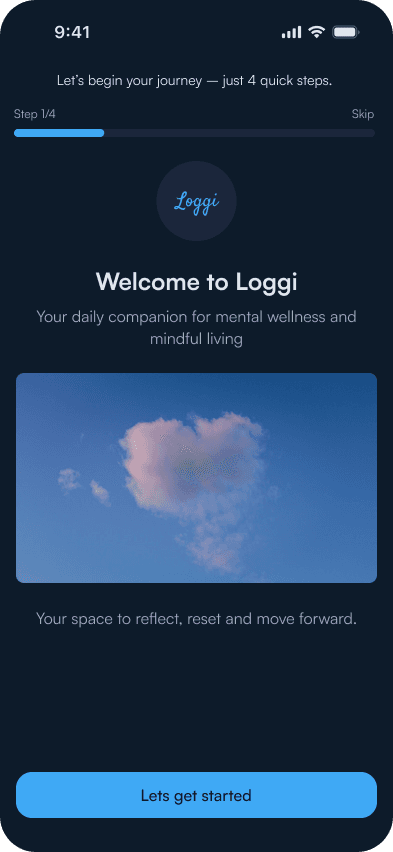
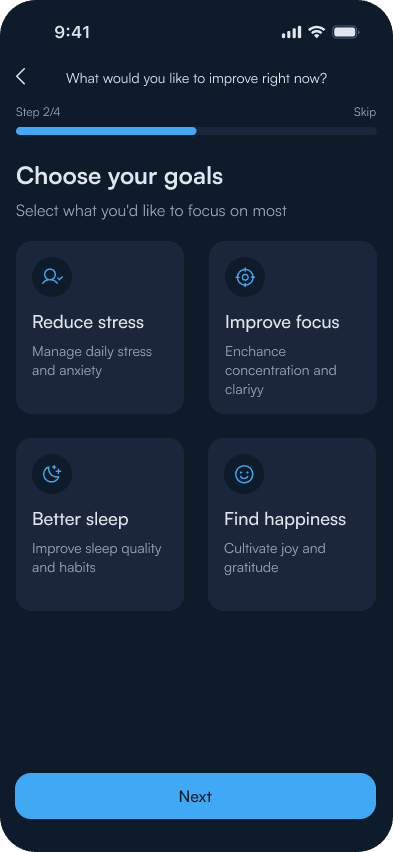
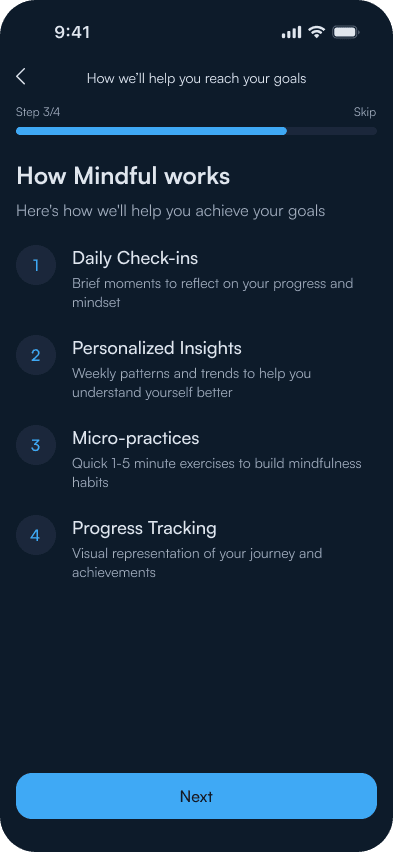
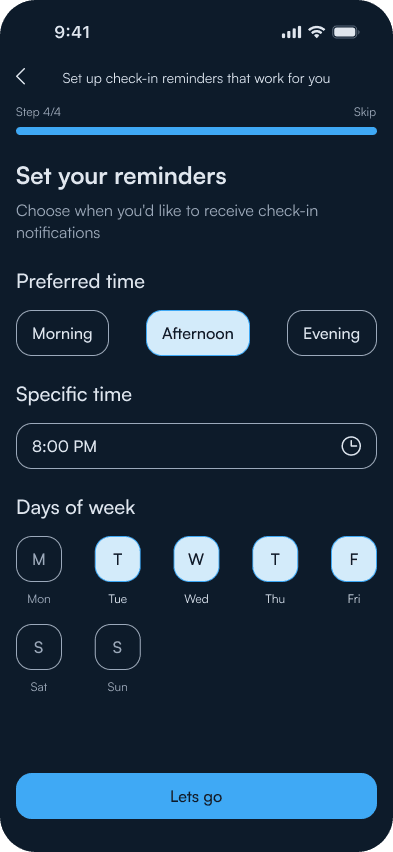
The onboarding needed to set the right tone from the start. I designed a 4-step flow that feels calm and goal-oriented without overwhelming new users.

Onboarding step 1

Welcome

Soft introduction

Onboarding step 2

Purpose

Clear value

Onboarding step 3

Preferences

Light setup

Onboarding step 4

Ready

Encouragement

Each screen builds confidence. No clutter. No pressure. Just a gentle invitation to begin.

CORE EXPERIENCE

The heart of Loggi: Daily check-ins

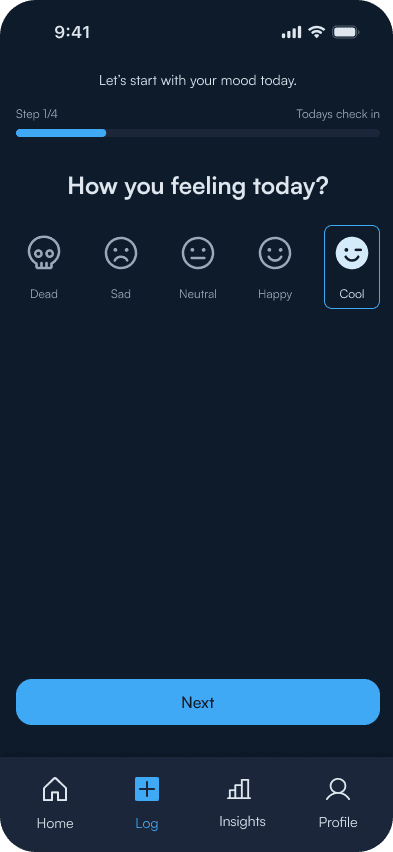
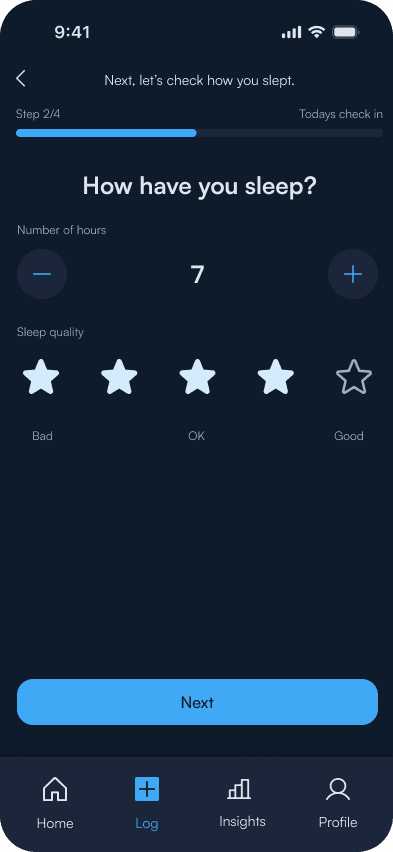
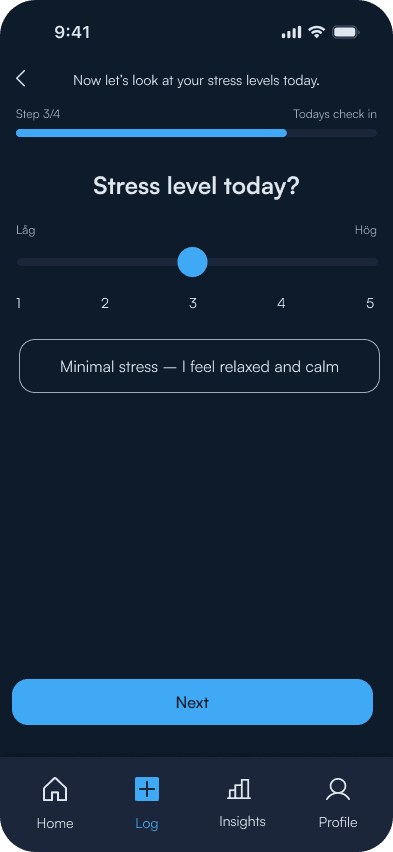
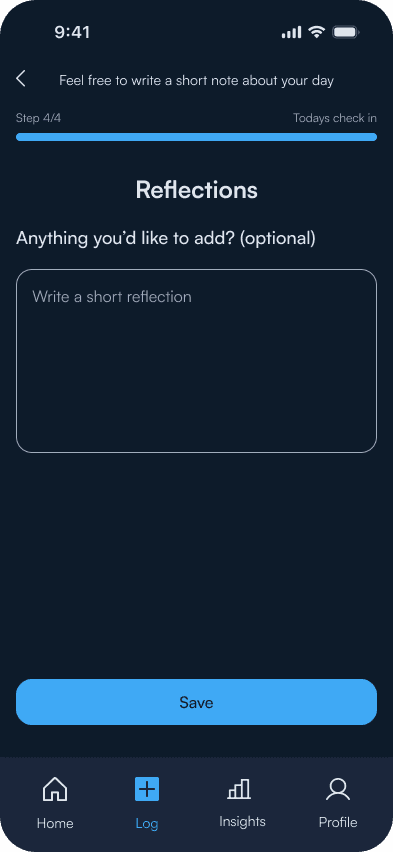
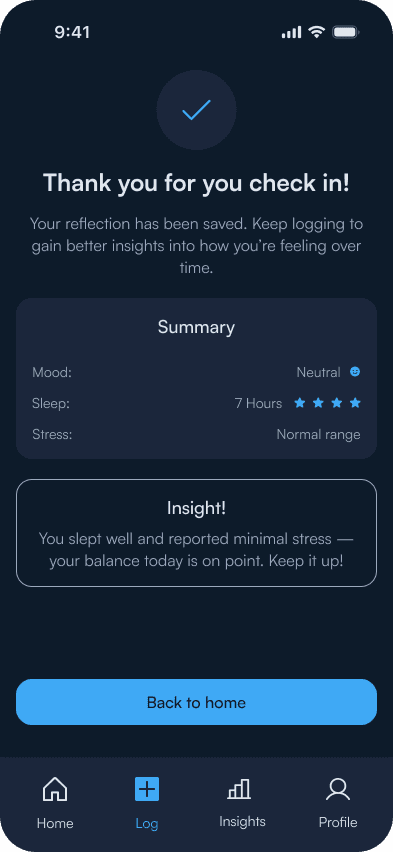
This is where the design philosophy comes to life. A 5-step flow designed to take under 60 seconds, with clear visual feedback and no judgment.

Check-in step 1

Mood

How are you?

Check-in step 2

Sleep

How have you slept?

Check-in step 3

Stress

Stress level today?

Check-in step 4

Reflection

Optional note

Check-in step 5

Complete

Thank you for checking in

Each step uses simple icons, clear labels, and supportive microcopy. The progress is visible but not overwhelming. Users can go back, skip, or pause anytime.

The flow respects the user's time while gathering meaningful insights. No guilt. No pressure. Just care.

MAKING DATA MEANINGFUL

Seeing patterns over time

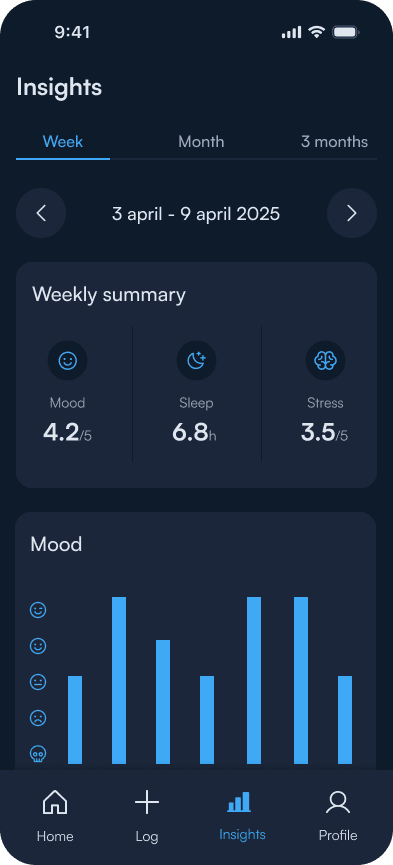
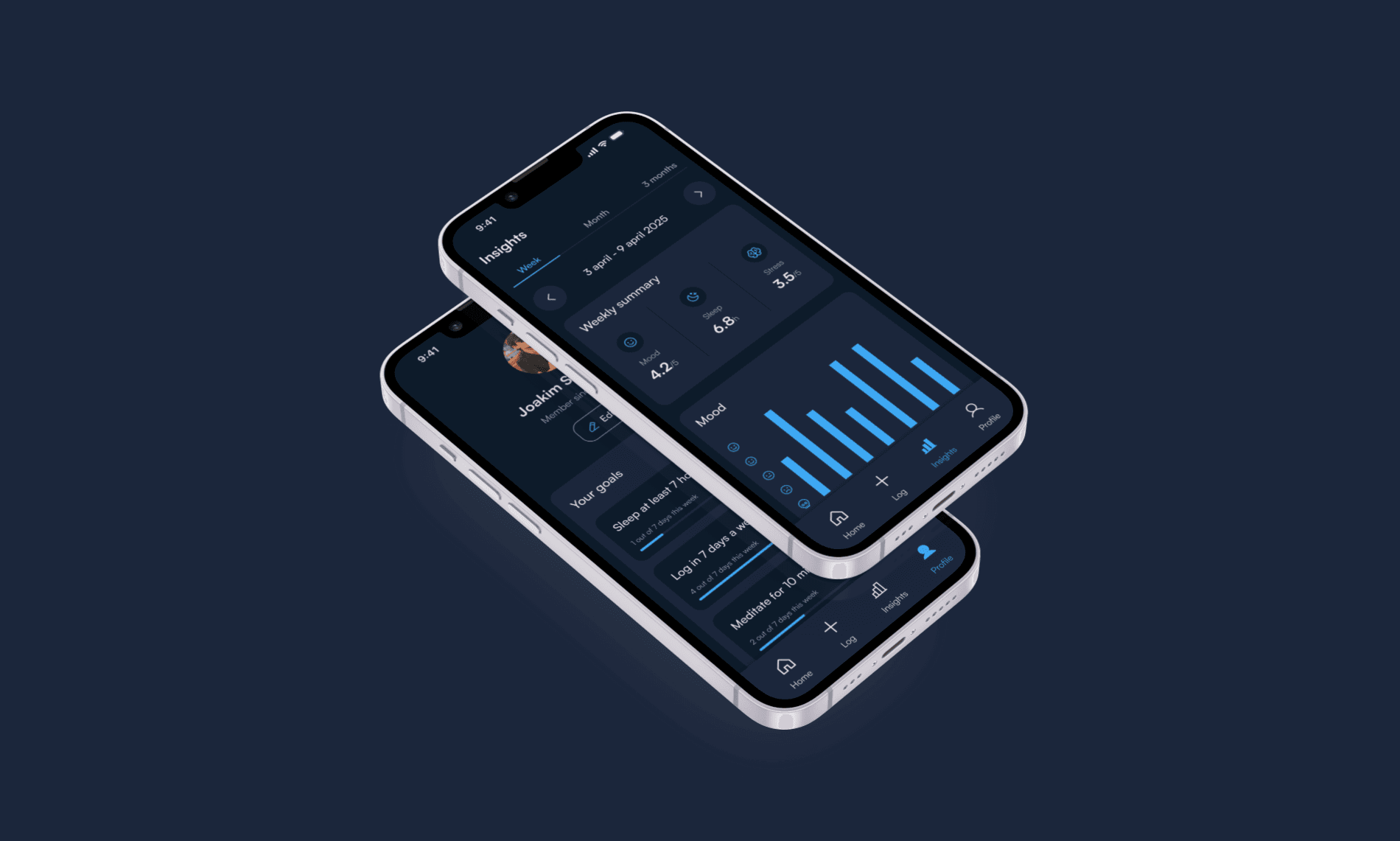
Check-ins are just the beginning. The real value comes from helping users see patterns and feel more aware of their wellness journey. Instead of overwhelming users with complex statistics, Loggi focuses on simple trends that reinforce progress without creating anxiety.

Insights

Insights

Visualized trends help users understand their mood and sleep patterns without feeling data-overwhelmed.

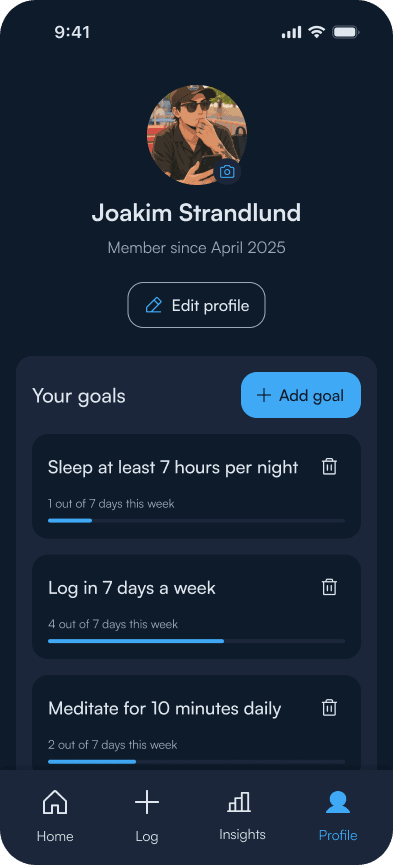
Profile

Profile

A clean, accessible space for users to manage preferences and personalize their experience.

ITERATION

Learning from Peers

Moving from "Clear" to "Human". While my initial designs were functional, peer testing revealed a gap in the emotional experience.

The problem

"Next" buttons felt robotic and selected states were visually competitive.

The fix

I replaced generic navigation with contextual CTAs like 'Log sleep' and 'Finish check-in.' This guides the user through the journey with clear intent, ensuring the path forward feels purposeful and informative rather than just a series of clicks.

Let's get started
Set my goals
Got it, next
Log mood
Finish check-in
View Insights
REFLECTION

What I learned

Working on Loggi deepened my understanding of how small UX decisions can impact emotional tone. I learned how to design for calmness and clarity not just in structure, but in copy, flow and feedback. Creating a supportive and guilt-free experience meant reconsidering details I might normally overlook, like selected states or CTA language.

Microcopy matters more than I thought

Changing "Next" to "Let's go" or "Complete" to "You're done" made the experience feel more human and supportive. Small words, big impact.

Visual rhythm creates calm

Consistent spacing, subtle animations, and dark UI all contributed to a feeling of "calm focus" that users mentioned in testing.

Less features, more clarity

I initially wanted to add journaling, meditation timers, and habit tracking. But keeping it simple made the experience more approachable.

Up next

Treebula

Turning complex forestry data into clear decisions